Recovery Needs Assistance: People, Tools and Services:
“The more one does the more one can do.” —Amelia Earhart
We live in a world where we are constantly in motion. Movement is such an important aspect of recovery. Without it our bodies atrophy, and that can happen in the blink of eye. When our mom was ill, we learned that movement was an essential part of her health and well-being.
Later, as Naomi lay in bed for weeks at time, first at Mass General and later at Spaulding Rehab I found myself advocating to get her the maximum amount of physical and occupational therapy possible. For example, we found if we did not speak up before a weekend, she would not get those services. Naomi had great determination. She went from not being able to walk to using assistive devices, and now to walking on her on steam.
When she came home that care continued, first with visiting nurses at home and later with outpatient rehab. Finding the right therapists makes a difference. I personally have a wonderful physical therapist. I emailed her, and she fit Naomi into her schedule and worked with her. Her positive energy and techniques made all the difference.
My next challenge came when Naomi was being discharged and coming home, I needed to get adaptive tools in place. Luckily, we live in a ranch house, and we had already installed a lot of adaptive tools. Our showers have grab bars. But there were other obstacles as well. Naomi’s bed was six inches too tall for her to get onto. After researching box springs, I found one at Home Depot that would work. Of course it came unassembled!
Once again, my team was essential to a successful outcome. One friend helped me carry the old box spring out for pick up and another friend helped me put the new box spring together and install a small bed bar to her bed.
Even though the rehab gave us some equipment, we live in an older house with narrow doors, so we needed a small walker and a commode to put over the toilet to raise the seat. There are many temporary adaptions that you can make in your home.
A tub chair is another important item. Insurance will only pay for one item in a period of time, so we wanted to get as much as we could and save that for something unforeseen. We already had a small transfer chair from mom that was initially incredibly helpful for transitions in and out of the car.
We were even able to get a top-of-the-line rollator free from our local senior center. Senior Centers have equipment usually free of charge. Many will work with you even if you are not living in that town. It is worth checking out. You can donate your equipment down the line when you are done with it.
Making day to living and movement possible takes some prep work but it is key to the recovery process. We all need movement to thrive.
Chicken Pie
Susan Fisher
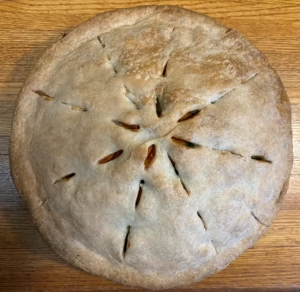
Last time I shared my fruit pie recipe. Once I made that pie it got me thinking about adaptions in cooking. I came up with a variation on a theme and created a savory Chicken Pie. Our mom made chicken pie with mashed potato topping much like a shepherd’s pie. That is not an option for us as mashed potatoes are not a part of Naomi’s renal diet. We enjoy this recipe especially when we are longing for some of our family traditions.
ABOUT THIS RECIPE:
We love Chicken Pie. I wanted us to have a healthy version of this comfort food. I felt it should be part of our day-to-day culinary repertoire.
Ingredients:
Wholly Whole Pie Crust (They have wonderful ingredients, do not add preservatives and they come frozen from Whole Foods)
12 chicken tenders cut in chunks
1 cup carrot circles
1 cup frozen corn
1 cup frozen peas
1 onion
Extra Virgin Olive Oil
2 cups College Inn no sodium Chicken Broth
Garlic Powder
Flour
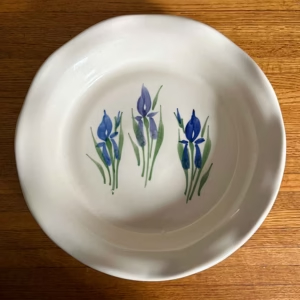
Ceramic Pie Plate – I use these because I find they cook the pie more evenly. I use a really deep pie plate from Emerson Creek Pottery
Preparation:
1. Begin by cooking the chicken tenders. I like to steam them in the unsalted chicken soup. Once cooked let them cool.
2. Let the oven cool off.
3. Chop up an onion, put a little olive oil in a pan and sauté the onion until cooked but not browned.
4. Slice a cup of carrots and cook them until tender.
5. In a pot heat the cup of pes and cup of carrots for a few minutes.
6. Chop the chicken into pieces.
7. In a pot put in 2 cups soup and heat. Wisk a couple of tablespoons of flour in thoroughly. Add some garlic powder to the mixture.
8. Lay the pie crust into the pie plate. (Roll it as needed.)
9. Put the chopped chicken in the bottom of the pie.
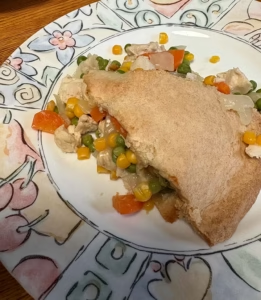
10. Lay the onions on top of that.
11. Add a few spoons of the soup blend on top. (Save the leftover and serve it on the side when having it for dinner.)
12. Mix the peas, corn and carrots together and lay on top.
13. Put a few more spoonsful of the soup mixture on top. (Let it sink in.)
14. Place the top crust on and seal around the edges. (Roll as needed if you need to stretch the crust.)
15. Cut slits in the crust.
16. Put in it a cold oven (ceramic pie plates can crack when put in a hot oven).
17. Bake at 350 for about an hour.
18. It is done when it bubbles, and the crust is golden brown.
This pie reheats easily.
What a beautiful testament to the power of movement, determination and advocacy—so important to have the right support and tools in place for recovery. Your healthy chicken pot pie variation looks absolutely delicious, and I love the tip about ceramic being best. Thank you so much for sharing!
Kerry-Thank you so much for your comments and support. Hope you enjoy the pie!-Susan
Susan and Naomi,
I am truly loving these blog posts! Susan, thanks for your terrific recipes. I hope many people are reading all of this great information!
My Very Best,
Jean
Jean,
So glad you are enjoying our posts! We hope others are reading them too. The recipes are a labor of love. Enjoy!
-Susan
Naomi and Susan,
I just began reading your blog! How wonderful and helpful it is, whether recuperating or moving through life with a disease that requires love and assistance from a caregiver. And it’s so good to follow both of you through this journey.
With love, cousin Brenda
How wonderful to hear from you, Brenda. We appreciate your feedback. We continue to learn a lot from this journey. Glad to have you with us along the way!
Love,
Naomi and Susan